DIY vs Agency: A Real Atlanta Case Study
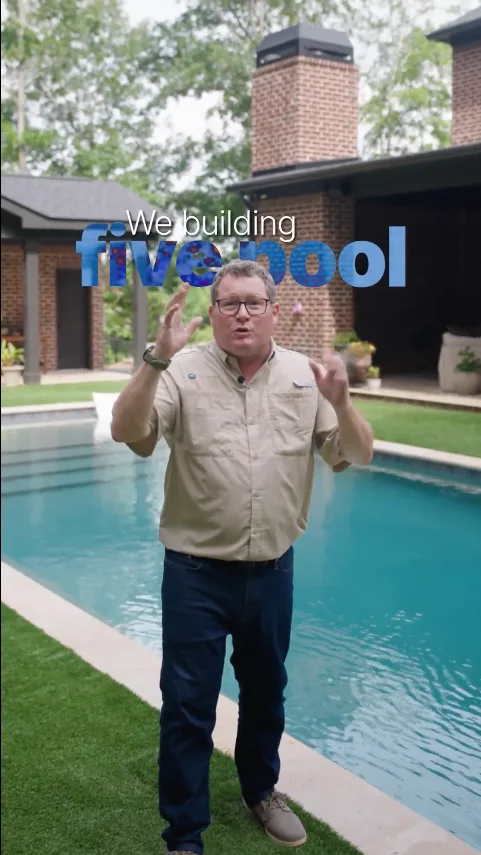
The clearest way to answer this question is with real numbers. Lullwater Pools is a custom in-ground pool builder serving North Atlanta homeowners. Before they hired us, they ran their own Meta ads for months.
What Happened When They Ran Ads Themselves
Across three campaigns they built themselves, Lullwater spent about $1,339 and got 35 leads. That works out to roughly $38 per lead. The real problem was worse than the cost: zero pools were sold from those ads.
When we looked inside the account, the issues were easy to spot:
- Weak creative. They were posting generic, AI generated images that looked like every other ad in the feed.
- Wrong audience. The campaigns were reaching people who were never going to buy a custom pool.
- Advantage+ turned on for everything. Meta's automation is useful in the right hands, but turned on blindly it basically lets Facebook use your money to test its own systems.
What Happened After Thrivr Took Over
Our campaign for Lullwater has spent $3,070 and generated 394 leads at $7.79 per lead. That is about one fifth of their DIY cost per lead, and Meta flags it as a high performing campaign.
More important than the lead count is what happened to the business:
- They were flooded with high quality leads, to the point where we started adding friction to the lead form to slow the volume down.
- They have been booked out for weeks.
- They now filter out anyone below their price point, turning away projects at $80,000 and under.
- One closed pool alone produced a 34.1x return on ad spend, with eight more pool designs in the works and set to begin.
Same business, same market, same platform. The difference was strategy, creative, and the system behind the ads.
When You Should Run Facebook Ads Yourself
I'll be straight with you: not every business should hire an agency yet.
If you are not covering your own salary yet, and you don't have the budget for both ad spend and an agency fee on top of it, run the ads yourself. In that stage, every dollar should go into ad spend, because ad spend is what actually puts you in front of customers.
How to DIY Without Burning Money
The catch is that you can't just boost a post and hope. Before you spend a dollar, give yourself at least three weeks of real study:
- Study what makes people click. Look at ads in your industry that have been running for months. Long running ads are usually profitable ads.
- Learn to write headlines and hooks. The first line and the first three seconds decide whether anyone reads the rest.
- Understand what drives a click through. What problem, promise, or offer makes someone stop scrolling and fill out a form?
- Optimize your website or landing page for conversion. Great ads sending traffic to a confusing page just burn money faster.
If you treat it like a skill you are learning, not a button you are pushing, DIY can absolutely work at the early stage.
The Biggest Mistakes Business Owners Make Running Their Own Meta Ads
After working with home service companies in more than 30 Georgia cities, I see the same mistakes again and again.
Trying to Outspend Bad Creative
Most owners don't think through what they post. They grab whatever photo they can find and assume a bigger budget will make up for it. That doesn't work anymore. Meta's algorithm rewards ads people actually engage with, so weak creative costs you more for every lead.
Not Split Testing
If you run one ad and wait, you have no idea whether it is good or just the only thing you tried. Here is how we test:
- Launch at least three different ads at a minimum of $15 per day each.
- Within two to three weeks, one ad usually emerges as the clear winner.
- Then we keep creating new ads to compete against it and try to take first place.
Touching a Winning Campaign
This one surprises people. When a campaign is crushing, owners often want to go in and change things. Don't. We have seen cost per lead skyrocket after a client pushed for changes to a winning campaign. We fought it, made the changes anyway, and the campaign never performed the same again.
Our rule is simple: we never touch a winning campaign. All new testing happens in a separate campaign so the winner keeps winning.
Letting Leads Die After the Form
A lead is not a customer. A lot of the money in Facebook ads is lost after someone fills out the form. Here is the follow up system we build for clients:
- Instant touch points. An automated Facebook or Instagram message, then a text that says, “Hi, this is the number we'll be calling you from,” then an email explaining what to expect.
- Fast, persistent calling. Speed matters. A Harvard Business Review study of 2,241 companies found that firms contacting leads within an hour were nearly seven times more likely to qualify them. We have clients double or triple dial new leads for three days in a row.
- A 14 day nurture pipeline. Leads who don't book in the first three days go into an automated sequence that keeps building trust until they are ready.
Every one of these touch points tells the homeowner the same thing: this is a real company, and they are the team to work with.
What Actually Makes a Facebook Ad Work for a Home Service Business
The single biggest difference between our ads and most DIY ads is the creative. We shoot custom video for every client instead of relying on stock photos or AI generated posts.
Why Real Video Beats Generic Posts
Video works because it is real. People get to see the actual company, the owner, and the crew out in the market building things. With Lullwater Pools, prospects kept saying things like, “Oh my God, you're a real company,” and told the team they wanted to work with them because they liked the owner or the operator they saw in the video.
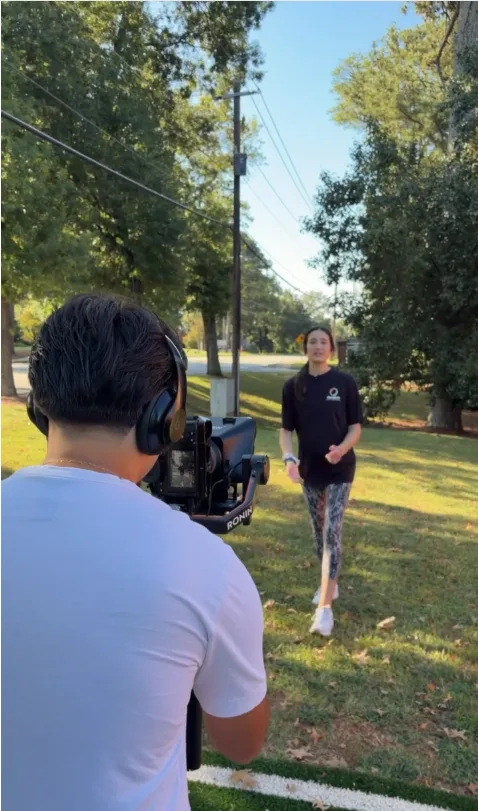
That kind of trust is almost impossible to build with a static graphic. In a feed full of templated ads, authentic video stands out.
Where Static Ads Still Fit
Static ads still have their place. They are a fast, cheap way to test offers and creative ideas. Our experience is also that people scrolling during the workday are more likely to stop for a quick static ad, while evening scrolling is when video does the heavy lifting of building trust. A strong account uses both.
The Anatomy of a Winning Ad
Every high performing ad we run has three parts:
- The hook. The first few seconds that stop the scroll. Attention spans are now under six seconds, so we edit with sound design, music, cuts, zooms, and transitions to hold attention.
- The body. The owner (or a hired actor, which also performs well) walks through the process, what makes the company different, and what their five star reviews say.
- The offer. This is the part most people skip, and it is the one that matters most.
How to Build an Offer Without Discounting
An incredible offer doesn't have to be a coupon. Often it is something you already do that nobody in your market is talking about. Maybe you take extra time to grade the site properly. Maybe you use premium materials as standard. Most homeowners have no idea what goes into a quality build, so explaining those features is real added value.
Alex Hormozi's value equation from $100M Offers is a great filter here. A stronger offer makes the result more likely, faster, or easier for the customer. When you frame your offer around value instead of price, you also attract fewer tire kickers.
How We Know an Ad Is Winning
We judge ads on the numbers, not on whether we like how they look. A winning ad has a high hook rate (the percentage of people who keep watching past the first few seconds) and a solid CPM. CPM stands for cost per mille, which is what you pay for 1,000 impressions. A low CPM means Meta is showing your ad efficiently.
Our best ads run for months at a time. Low performers get swapped out much faster.
What Hiring a Facebook Ads Agency Really Costs
There is no honest one size fits all price, which is why we price every engagement around what the client actually needs. Some businesses need the full package. Others already have pieces in place.
A complete engagement with us can include:
- On location video shoots, scripting, and editing
- Full Meta ads management and ongoing split testing
- Sales support, including call scripts
- CRM setup and automations for lead follow up
- Help with the website and landing pages
There are no hidden costs. Everything is included in the price we agree on.
Why We Want to Touch the Whole System
Ads are only one piece. If we can raise conversion rates at the landing page, the follow up, or the sales call by even a few percentage points, the client gets more booked jobs from the same ad spend. More jobs make for happy clients, and happy clients stay with us longer. That is the whole business model.
The Hidden Costs of DIY
When owners compare agency fees to doing it themselves, they usually count the DIY cost as zero. It isn't. Lullwater Pools spent over $1,300 on ads that sold nothing, plus months of their own time. Wasted ad spend, bad creative, slow follow up, and the hours you spend in Ads Manager instead of running your business all count. To see what more leads are actually worth to you, run your own numbers through our lead math calculator.
How to Vet a Facebook Ads Agency in Atlanta
If you decide to hire, don't walk into the sales call blind. Take half an hour beforehand and write down every question you have. The call is your chance to make them prove it.
The number one thing to ask for is results. Have the agency show you real campaigns, real numbers, and real creative they made. Past results across multiple clients are the best indicator they can do it again for you. We send prospects videos that explain our full process before the call, so they can see we are the real deal before we ever talk.
Red Flags to Watch For
- Fake local presence. Agencies that pretend to be Atlanta or Georgia based but don't know the market.
- Long contracts. If an agency needs a 12 month lock in, ask yourself why. We work in four month terms, because if you are winning and happy, you will stay.
- They own your ad account. You should always own your ad account. Always.
- Vanity metrics. Cost per lead matters, but on its own it is a vanity metric. What really matters is cost per booked appointment and customer acquisition cost.
- Templated creative. Proven structures, formats, and hooks are fine. But the ads themselves should be unique to your business, not cheap AI voiceovers recycled across clients.
- You do all the work. Find out if they expect you to hire the videographer, find the talent, and write the scripts yourself.
Questions to Ask on the First Call
- What makes you different from other agencies?
- Where are you based, and will I meet you in person?
- Can you show me results and creative from businesses like mine?
- What do your ads look like, and who makes them?
- What is your guarantee?
- What happens if I don't get results soon?
- What is your expected time to first lead?
- If the leads are good but we aren't closing, will you help on the sales side?
You should always ask about guarantees. Ours is simple: if we don't produce the leads you want, we keep working for free until you get a positive return. Period.
What to Expect in Your First 90 Days
One of the most common questions we get is how long it takes for Facebook ads to work. Here is the realistic timeline with us.
Week One: Your First Qualified Lead
Expect your first qualified lead within seven days of filming. Editing takes us about three days because we obsess over the details: sound, music, cuts, zooms, and transitions that keep a short attention span locked in long enough to hear your offer.
The First 30 Days: Exiting the Learning Phase
In the first two weeks, the campaign exits Meta's learning phase, which is when the algorithm figures out who to show your ads to. After that, creative testing and split testing begin.
This is also when we tune lead quality with your sales team:
- Too many unqualified leads? We add friction, like more questions on the form, so the people who come through are serious.
- Every lead qualified but not enough of them? We remove questions so more people make it into the pipeline.
The goal is balance, and we get there by talking with the people actually calling the leads.
Day 60: Competing for First Place
By 60 days a winning ad has usually emerged (often in just two to three weeks), and we start building new ads to beat it. This is where results keep improving month over month.
Day 90: A Real Acquisition System
At 90 days you have a full campaign, clear reporting, and you know exactly where your numbers sit. That means you know your cost per booked appointment and your customer acquisition cost.
That is the moment you have a real business instead of one that depends on referrals.
How Much Ad Spend Do You Need?
We generally start clients at a minimum of $45 per day in ad spend. Once a winning ad emerges, we ramp up from there.
Why a Local Atlanta Meta Ads Agency Matters
We only work in Georgia, and that focus is a big part of why our results hold up. We have run campaigns across more than 30 Georgia cities, from Alpharetta and Johns Creek to Peachtree City, Athens, McDonough, Marietta, Kennesaw, and Decatur.
We Know What Georgia Homeowners Buy On
Working in one market lets us learn its buying signals, customer types, and personas. Georgia homeowners value relationships and authenticity. They want to work with people who say they will do something, show up, and do it. Ads that feel real win here.
Targeting Changes Neighborhood by Neighborhood
What works in one part of metro Atlanta can flop in another, largely because of income differences between areas. A homeowner in Johns Creek doesn't care about a discount nearly as much as a value add. Free plumbing upgrades or lighted post caps on a big new deck will beat “10% off” there every time.
We Show Up in Person
Being local means we can sit down face to face. I come out with our videographer and a teleprompter, and we talk through everything together. If there is ever a problem, you get me on the phone. We get in the trenches with you, and we ask the same commitment back, because the best results come from owners who are bought in.
Signs You've Outgrown Running Your Own Ads
There is no magic revenue number where you suddenly need an agency. Instead, watch for these signs:
- You aren't creative testing. The same ads have been running for months with nothing new competing against them.
- You aren't using the data. There is information in your account about what is working, but you aren't acting on it.
- You found a winner and didn't scale it. Ad spend never increased even after an ad proved itself.
- There is no tracking system. You can't say what your cost per booked appointment or customer acquisition cost is.
- Ads Manager is eating your week. Think about your hourly rate. Is this the best use of your time, or would you rather hand it to a team that does it all day?
- Your cost per lead keeps climbing. If you are watching it rise week after week, and it is sitting near $300 per qualified lead, something is broken.
- Your follow up has no system. There are no automations on the back end, and leads fall through the cracks.
If several of these sound familiar, DIY is probably costing you more than an agency would.
“Facebook Ads Don't Work for My Business”
I hear this from Atlanta business owners all the time, usually after they've been burned by an agency. My answer is simple: look at the results. Facebook and Instagram ads work, and Meta advertising is not going away.
The Biggest Myth About Facebook Ads
The biggest myth is that Facebook ads are always changing, or that they are too hard to figure out. In reality, success comes down to mastering the basics. It is just like sales. If you do the basics well, and better than everyone else in your market, you will dominate.
Why We Do Things Differently
Our mission is to be the agency we wish we had when we started. We are fighting the agencies that lock owners into long contracts and never deliver. We work locally, we stand behind our name, and because our founder came from aerospace engineering, we lean on the data most agencies ignore.
You Can Build a Business That Doesn't Depend on Referrals
If you take one thing from this post, let it be this. Referrals are great, but they are not a system. A predictable stream of qualified leads, a follow up process that turns them into booked appointments, and numbers you actually know are what turn a busy company into a real business.
We have done this for home service companies across Georgia, and we will keep doing it. Whether you run your own ads or hire a Facebook ads agency in Atlanta, you can do the same.
If you want to see what this would look like for your business, book a call with Thrivr Productions and we'll show you real campaigns and real numbers.
Book a callFrequently Asked Questions
Is it better to hire a Facebook ads manager or run ads myself?
If you aren't paying yourself yet and can't afford both ad spend and an agency, run them yourself and put every dollar into ad spend. Once you have the budget, or your DIY results have stalled, a specialist will almost always get a lower cost per booked job.
How much should a home service business spend on Facebook ads?
We generally start at a minimum of $45 per day and scale up once a winning ad emerges. For testing, plan on at least $15 per day per ad across three ads.
How long does it take for Facebook ads to work?
With us, expect your first qualified lead within seven days of filming, a winning ad in two to three weeks, and a fully dialed in system with clear numbers by 90 days.
Do I need video for my Facebook ads?
You can test ideas with static images, but authentic video featuring your owner or crew builds far more trust. For high ticket home services, that trust is what turns a lead into a sale.
What should I look for in an Atlanta Meta ads agency?
Proven results, real local presence, short contracts, a clear guarantee, custom creative, and the fact that you own your ad account. Ask to see their numbers before you sign anything.
Should I turn on Advantage+?
Not blindly. Turning on every automated setting often lets Meta spend your budget on its own testing. Use automation deliberately, with strong creative and the right audience behind it.